
This Retailer Is Testing Seaweed Packaging For Fresh Produce
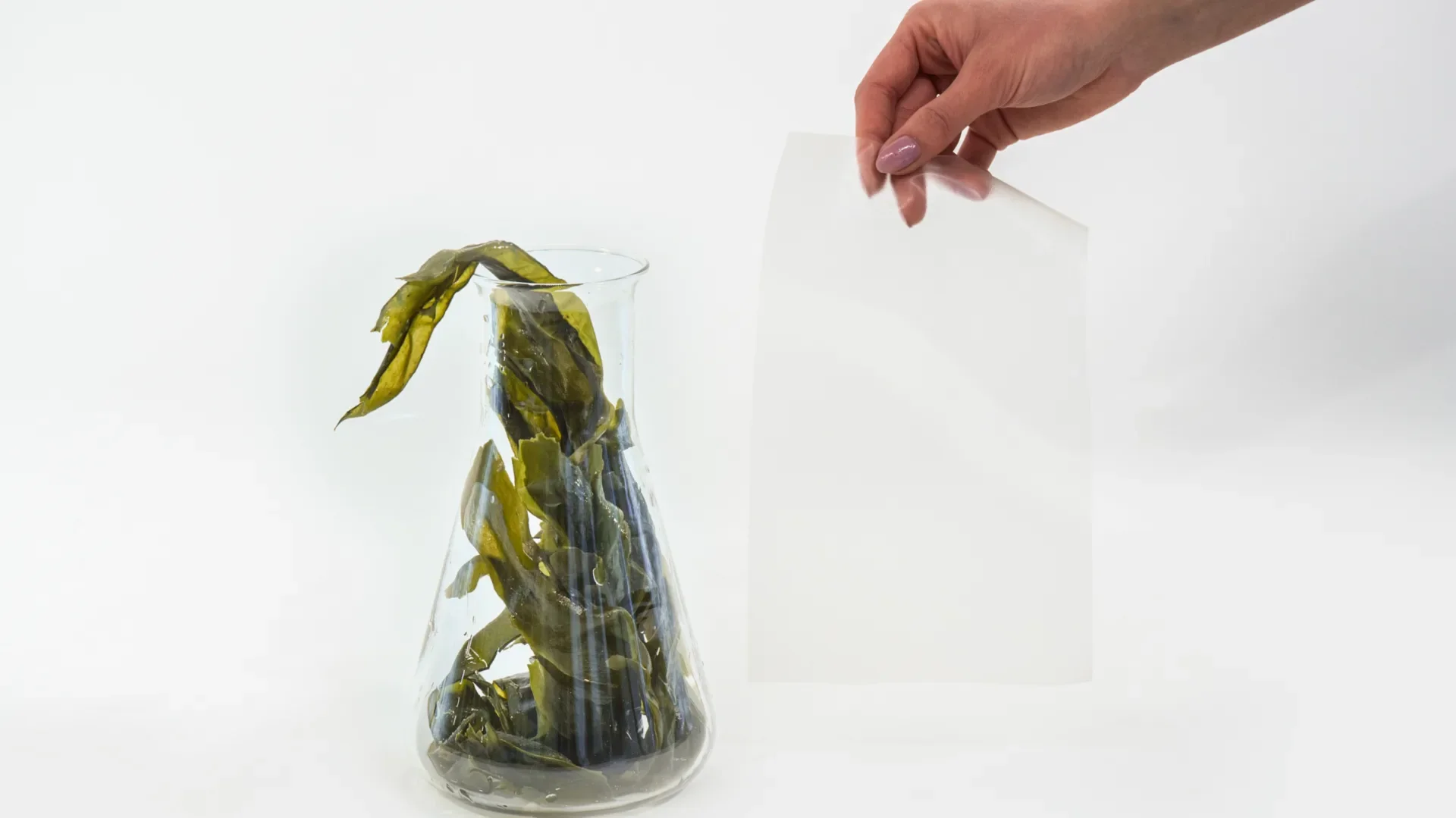
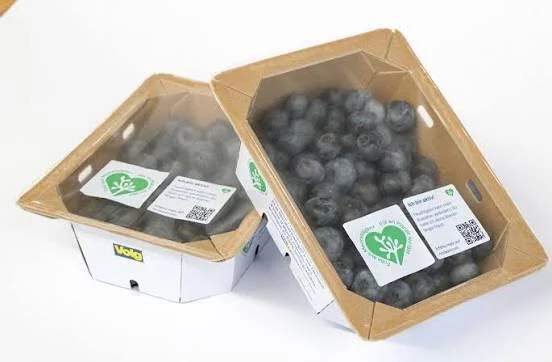
Swiss startup noriware built its seaweed packaging film for an EU plastic ban on small packs of fresh produce that takes effect in 2030. Its first retail pilot came back with a number grocers can use now. At Swiss retailer Volg, blueberries sealed under the film saw more than 50% fewer write-offs than in the previous year and than at reference distribution centers still using conventional plastic.
Coop is now running a three-week pilot of the same film on raspberries, according to foodaktuell's report on a noriware LinkedIn post, and has published a customer Q&A on the test packaging. The film was designed around a regulation, and its first proof from store shelves is about food waste, an argument that also works in markets the EU rule never reaches, including the U.S.
Inside the Volg pilot
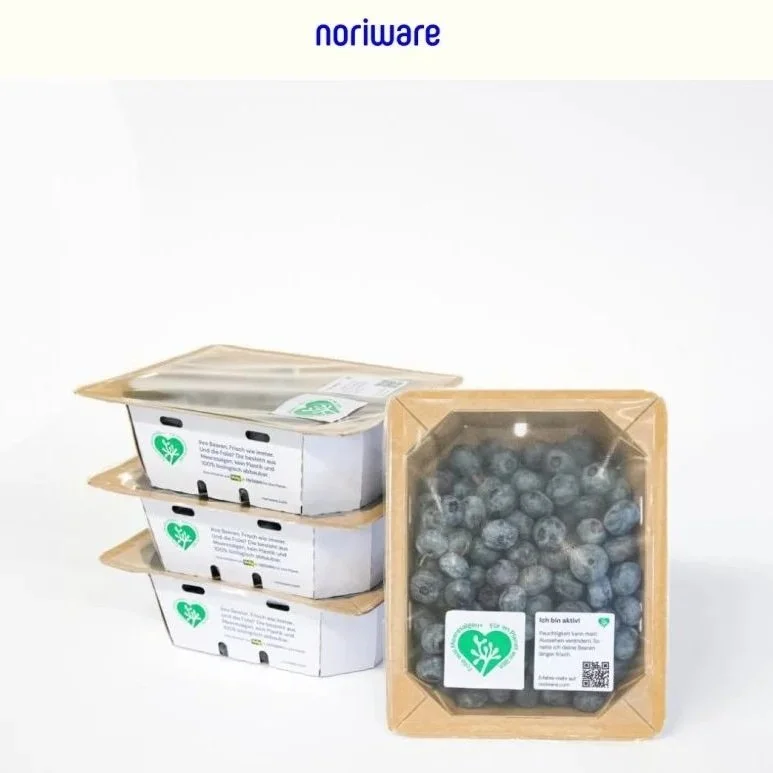
In June 2026, punnets of Swiss blueberries sealed with noriware's norifresh film went to 300 Volg stores across German-speaking Switzerland. Tobi Seeobst AG packed them on its regular line at 60 packs per minute, and the fruit moved through Volg's normal distribution network for three weeks.
The company's explanation centers on moisture. Berries keep releasing water after they are packed, conventional plastic traps it as condensation, and norifresh is breathable enough to let the excess escape. In a follow-up raspberry trial, Volg's press office told foodaktuell that the fruit stayed about two days longer without signs of rot than in conventional packaging.
In a February 2024 profile, Forbes Austria reported that the company's first commercial film would be water-soluble and suited only to dry goods. Water was the obvious weakness for a film made from seaweed, and in a sealed punnet of berries, managing it is now the headline result.
Volg does not yet sell berries in the film on an ongoing basis, according to foodaktuell. The retailer wants the film to become more transparent so shoppers can see the fruit, to stay smooth through changes in temperature and humidity, and to seal more reliably to the cardboard tray. Volg still called the film an interesting alternative to conventional plastic packaging and said its development is worth following.
Why the EU's definition of plastic matters here
The EU's Packaging and Packaging Waste Regulation bans single-use plastic packaging for fresh fruit and vegetables sold in quantities under 1.5 kg from January 1, 2030, including nets, bags, trays, and containers. The EU's legal definition of plastic, written into its single-use plastics rules, excludes natural polymers that have not been chemically modified. Startupticker reports that norifresh is made from chemically unmodified seaweed, which places it outside the PPWR definition of plastic and could let packers use it across the EU after 2030.
Both retail pilots ran in Switzerland, which is not an EU member, so the PPWR does not directly apply to packaging sold only on Swiss shelves. The published data from the Volg pilot is about spoilage and packing-line speed.
Seaweed packaging beyond the berry aisle
The same legal line has mattered in foodservice. When Dutch quick-service chain Kwalitaria moved its fries and snack trays to Notpla's seaweed-based coating across 160 restaurants, Packaging Insights reported that the Dutch Human Environment and Transport Inspectorate confirmed the trays are fully plastic-free, which puts them outside EU single-use plastics rules. The commercial bar remains high. In March, SynBioBeta reported that California-based Sway cut two of its 13 employees, mostly in R&D, to shift from exploratory materials work toward launching its first commercial product, a seaweed-derived resin for flexible packaging. The same report noted that seaweed materials must meet stringent requirements on performance, cost, and manufacturability while relying on an underdeveloped supply chain.
For U.S. founders, the PPWR is someone else's regulation. Produce spoilage is everyone's. ReFED's 2026 U.S. Food Waste Report found that in 2024, fresh produce accounted for 45.4% of all surplus food in the country and surplus food at retail was valued at $26.9 billion. A film that measurably cuts write-offs has a sales argument that needs no regulation behind it.
What to watch from Coop
Founded in 2022 and based in Lupfig in the canton of Aargau, noriware closed a €4.3 million seed round in January and reported six-figure pre-orders for the year ahead. The company claims norifresh has a carbon footprint up to 89% lower than conventional PET. CEO Jessica Farda told Startupticker that the Volg pilot showed the film could "perform better than plastic in terms of spoilage rates," and the company aims to sell its first commercial units in 2027.
The next number to watch is Coop's raspberry result, since noriware describes raspberries as one of the most sensitive and loss-prone products in the berry category. The second is Volg's list of fixes. The European Commission owes detailed guidance on exemptions by February 12, 2027, and each EU member state may add exemptions of its own, so the size of the 2030 market is not yet settled. If either Swiss retailer moves the film from three-week pilots to everyday shelves before then, noriware will arrive at 2030 with spoilage data in hand, whatever the final exemptions look like.
RECENT POSTS

Get the newsletter.
The funding rounds, founder moves, and industry shifts you need to know in plant-based and sustainability. Plus event invites and founder stories worth reading.