
This Is The Best Protein According to a New Protein Analysis
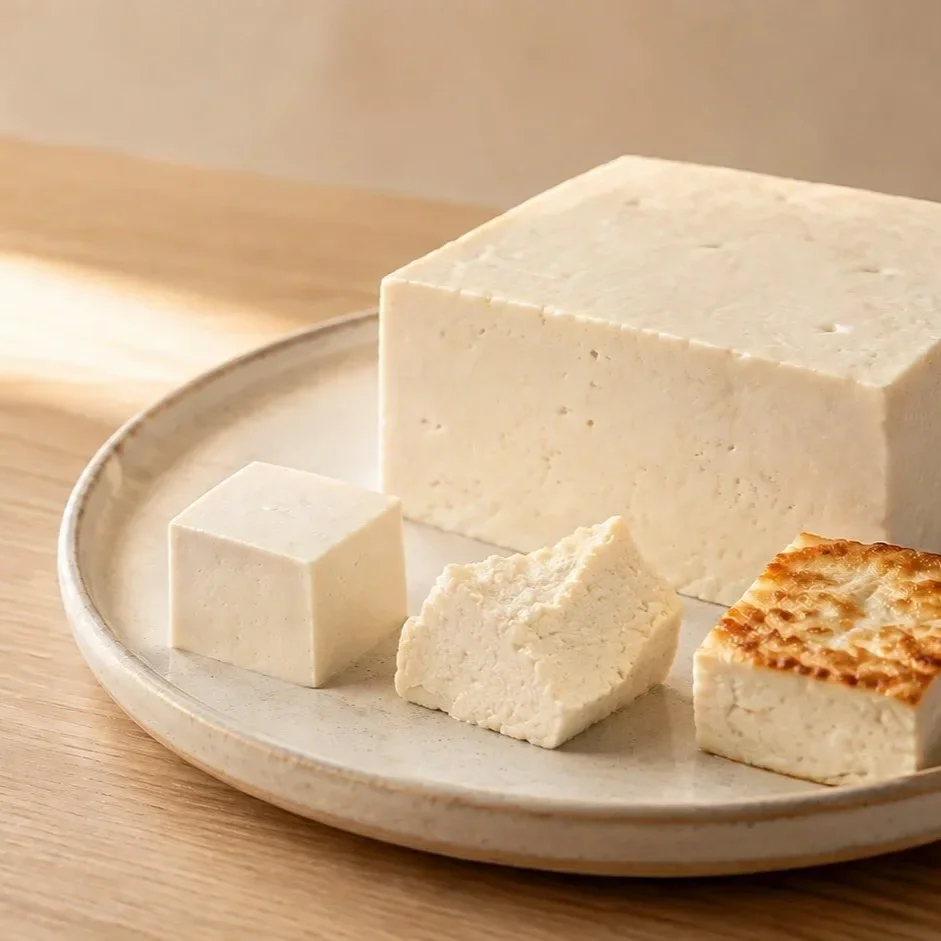
Tofu scored 36 out of a possible 40 points on a new scorecard that rates protein sources on health, affordability, and environmental impact at the same time. It finished first among 20 foods and won both halves of the score. Its category is also one of the plant-based segments that kept growing at U.S. retail last year, and the company that leads the U.S. tofu market says its high-protein tofu drove its record year.
For anyone building or backing a protein brand, the ranking is an early look at how "best protein" gets judged when one number has to answer for both the shopper and the planet. In its first version, the winner is an everyday grocery item, and the scorecard already has a column built for proteins that are still scaling up.
How the BPI Score works
Dr. Chris Macdonald, a behavioral scientist at the University of Cambridge who founded the Better Protein Institute, introduced the BPI Score in a perspective paper published July 29 in Frontiers in Sustainable Food Systems. A Planet Score worth up to 16 points covers greenhouse gas emissions, water pollution, land use, and freshwater use, using a 2022 dataset that estimated the environmental impacts of 57,000 food products. A People Score worth up to 24 points covers sodium, saturated fat, cholesterol, whether a food is a complete protein, affordability, and supermarket availability. The environmental, nutrition, and price figures are all calculated per 100 grams of protein, so the ranking compares equal amounts of protein rather than typical portions.
Tofu earned the maximum 16 on the Planet Score and the top People Score of 20. The paper puts tofu at 0.61 kilograms of greenhouse gas emissions per 100 grams of protein against 64.19 kilograms for beef, and at 2.16 square meters of land against 211.38. Every food in the top quintile was plant-based (tofu, chia seeds, beans, and quinoa), and every food in the bottom quintile was animal-based (mozzarella, lamb, beef, and cheddar, which finished last with 13 points). In the full ranking, chicken breast placed seventh, one spot behind lentils, and tuna placed eighth.
The one measure every food aced
All 20 foods earned the maximum availability score because every one was sold in UK supermarkets. Macdonald kept the measure anyway, writing that it will matter as new protein products move from proof of concept to commercialization and scale-up, with precision fermentation and lab-grown meat as his examples. For now it is the only measure on which all 20 foods tie, which makes the most forward-looking line on the scorecard the one that changed nothing.
The paper is candid about its gaps. Affordability comes from prices at a single UK chain, Aldi, and Macdonald calls the score's accessibility metrics a "localized proof-of-concept" rather than a framework that holds across borders. The five-point grading compresses outliers, and factors he flags for future versions, including animal welfare, the opportunity cost of land, antimicrobial resistance, and zoonotic disease risk, are not yet scored. He argues that adding ethical considerations and land opportunity costs would likely widen the divide between plant and animal proteins, and a second version is already in development.
Where tofu stands at U.S. retail
In U.S. stores, tofu sits in one of the plant-based categories that are still growing. According to GFI's analysis of SPINS data, U.S. plant-based food sales totaled $7.9 billion in 2025 with dollar sales down 2%, while tofu, tempeh, and seitan grew in both dollars and units and held prices steady over three years, though GFI notes that growth leveled off after a stronger 2024. GFI's dataset also leaves out inherently plant-based foods, naming chickpeas and kale as examples. By that definition, staples such as beans, lentils, quinoa, and seeds largely fall outside the numbers, which leaves tofu as the top-six food the category's own sales tracking clearly counts.
The market leader's growth is being led by protein. Pulmuone, the Korean food company that bought Nasoya in 2016 and leads the U.S. tofu market, reported record U.S. tofu revenue of 224.2 billion won (about $155 million) for 2025, up 12% and double its 2021 level. Its high-protein tofu led that growth with 41.5 billion won in sales, nearly triple the 2021 figure. In February, the company said it expected to finish a production line expansion in Ayer, Massachusetts, by the end of March and planned to ramp up output in Fullerton, California.
Among U.S. shoppers more broadly, protein keeps climbing the priority list. In IFIC's 2026 Food & Health Survey, a high-protein diet was the most common eating pattern for the fourth straight year, followed by 27% of Americans compared with 4% in 2018, and 70% said they actively try to include protein in their diet. Price ranked second among purchase drivers at 78%, behind only taste. A scorecard that measures foods per 100 grams of protein and counts affordability is grading on two things American shoppers already say they weigh.
The next thing to watch is version two. Macdonald says it will bring a wider grading scale and some of the harder-to-quantify factors left out of the first version, and his availability measure is already in place for the precision-fermented and lab-grown proteins still moving through commercialization and scale-up. When any of them is scored, the benchmark is the food already sitting in the refrigerated case.
RECENT POSTS

Get the newsletter.
The funding rounds, founder moves, and industry shifts you need to know in plant-based and sustainability. Plus event invites and founder stories worth reading.