
This Plant Based Cheese Company's Revenue Is Up 45%
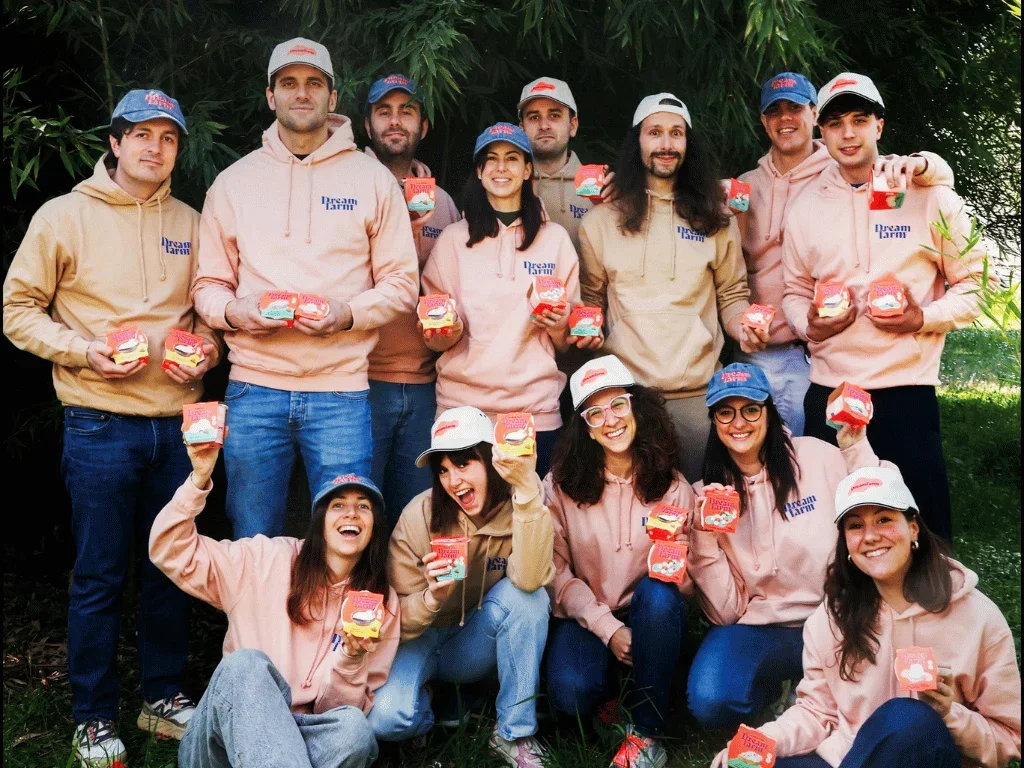
Source: Dreamfarm
Dreamfarm makes its almond and cashew cheeses in the province of Parma, where every wheel of Parmigiano Reggiano has to age at least 12 months before it can carry the name. When Green Queen asked CEO Giovanni Menozzi for his advice to others in the category, he said "it helps to pick the battles you can win." Fresh Italian cheeses work well in plant-based form, he explained, while a 24-month aged cheese "is a different story."
Dreamfarm picked mozzarella, ricotta, and stracciatella, and its revenue rose 45% in the first eight months of 2026 compared with the same stretch of 2025. The brand ended August with an 11% share of Italy's plant-based cheese market, up from 7.4% a year earlier. How it got there, through everyday formats, a pitch aimed at flexitarians, and open caution about discount-driven volume, is a set of choices founders well outside cheese can borrow.
From €130,000 to €1.8 million
Menozzi told Green Queen that revenue grew from €130,000 in 2023 to around €1.8 million in 2025, nearly 14 times larger in two years. This year's 45% pace is slower than 2025, when sales doubled, but it is building on a much larger base. July was the best month in the company's five-year history.
Much of that momentum comes from wider distribution. Weighted distribution for Dreamfarm's flagship mozzarella, sold as balls packed in water, reached 43% in August, up from 35% a year earlier, and its ricotta rose from 25% to 30%. The brand now sells through more than 2,000 points of sale in Italy, France, Belgium, the Netherlands, and Germany, with partners including Esselunga, Coop, Conad, Monoprix, Delhaize, Albert Heijn, EDEKA, and the online grocer Picnic. Roughly a quarter of revenue comes from outside Italy, and Menozzi named Switzerland as the next market.
At home, GFI Europe's analysis of Circana retail data puts Italian plant-based cheese sales at €25.9 million in 2025, up 17.1% from 2024 and 69.7% from 2023. Cheese is the fastest-growing of the five categories GFI counts toward Italy's plant-based total, and on GFI's numbers Italy posted the strongest plant-based cheese growth of the six European markets in the report. Germany, Europe's largest plant-based market, saw the value of its plant-based cheese sales fall 7.4%.
A pitch built for flexitarians
Dreamfarm's next push targets flexitarians. These shoppers "aren't looking for a cause," Menozzi said, and want food that fits how they already eat, so Dreamfarm sells into existing habits like stracciatella on pizza or mozzarella in a salad. In-store and event tastings work well for the brand because people who try the product tend to buy it, and Menozzi said that once someone tries the stracciatella or mozzarella, "it usually ends up in their fridge every week."
The Italian shopping data backs that wide aim. YouGov Shopper figures reported by Il Sole 24 Ore show more than 15 million Italian households, or 59.3%, bought plant-based products in 2024, while about 3 million Italians identify as vegetarian or vegan. Even if every one of those 3 million people shopped for a separate household, most of those 15 million carts would still be filled by shoppers who are neither vegetarian nor vegan.
Wary of the discount habit
Menozzi's second piece of advice concerns pricing. Brands need to be careful with promotions, he said, because "if volume only moves with deep discounts, growth won't last." Dreamfarm is building that caution into its own plan. After heavy investment this year in its Parma plant, brand, and team, the company is targeting profitability by the end of 2028. Menozzi expects growing volumes to help cover the plant's fixed costs and says the company is working toward a channel mix that relies less on promotions. Its 2027 plan centers on building brand awareness and getting more people to try the products and buy them again.
The same worry runs through new research from outside the plant-based aisle. A study from marketing professor Les Binet and Kantar's Dom Boyd, unveiled at the IPA Effectiveness Conference on October 7, surveyed 250 senior marketing and insight leaders at UK consumer goods businesses. Research Live reported that 75% of them could not estimate what share of their promotions were profitable, even though price promotions now outspend paid media advertising. The study also found that 76% repeat promotions without assessing them for profitability. Binet compared promotions to an addictive drug whose "high wears off quickly."
Wider distribution and repeat buyers account for much of Dreamfarm's growth so far. The number to watch next is how much of its volume moves at full price. If that share climbs while the brand enters Switzerland and runs its 2027 trial push, the 2028 profitability target will rest on volume that moves without deep discounts, which is exactly the test Menozzi set for everyone else.
RECENT POSTS
Get the newsletter.
The funding rounds, founder moves, and industry shifts you need to know in plant-based and sustainability. Plus event invites and founder stories worth reading.