
What Will The World Eat In 2035?
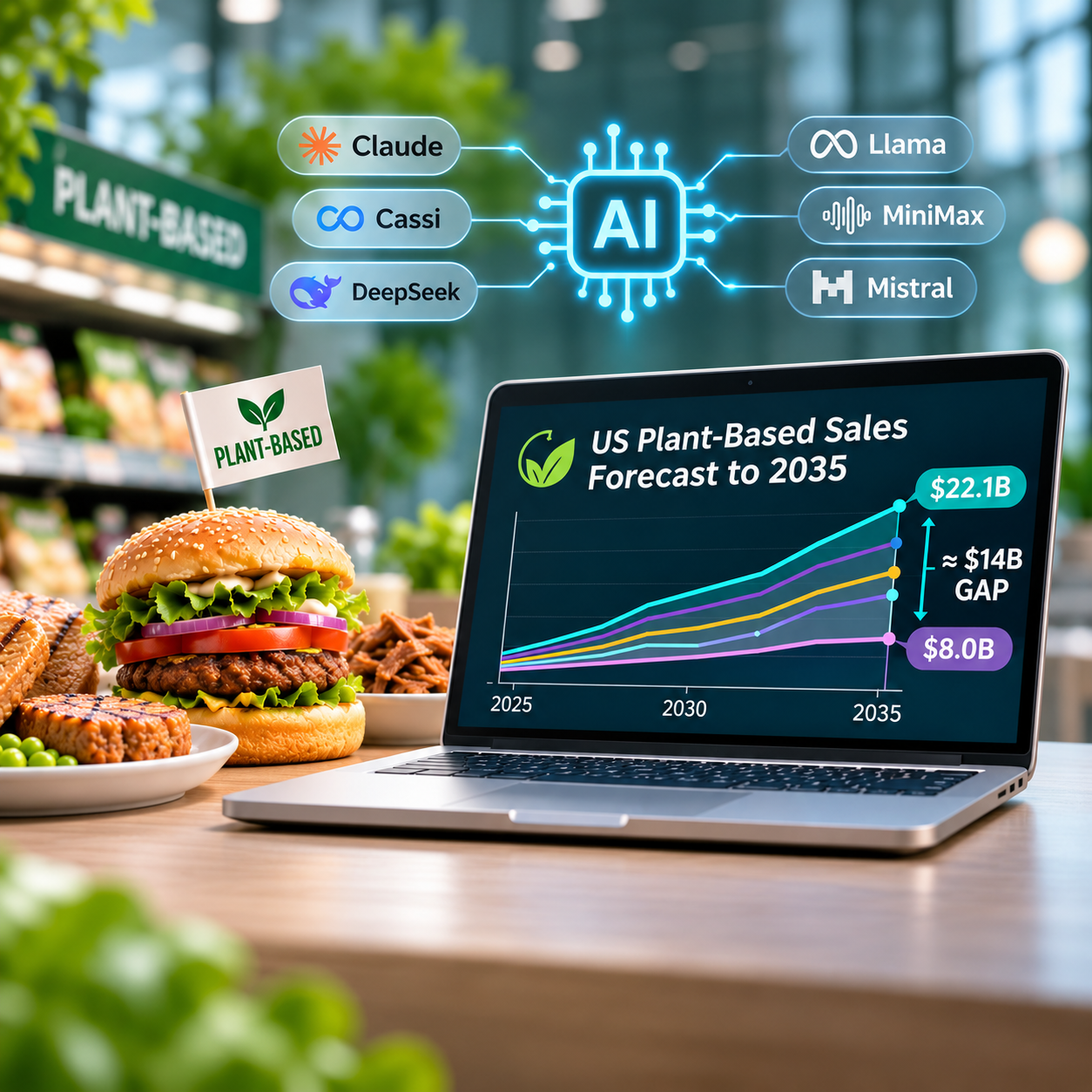
Six AI platforms built on large language models got the same assignment, forecasting US sales of plant-based foods, cultivated meat and fermentation-derived proteins through 2035, and their plant-based answers landed roughly $14 billion apart. The forecasts come from What Will the World Eat in 2035?, two open reports from AltProtein.Jobs, a project of CellAg Deutschland, developed in the Sentient Futures Project Incubator. The gap follows what each scenario was anchored on.
According to the study, the six platforms (Claude, Cassi, DeepSeek, Llama, MiniMax and Mistral) agreed on the main obstacles, led by the price premium over animal products, but split on the outcome. Their 2035 plant-based sales figures run from about $8 billion, which is flat in real terms, to $22.1 billion. Scenarios built on observed sales came in cautious, and scenarios leaning on previously published growth predictions came in optimistic. US plant-based retail sales were $7.9 billion in 2025, down 2% from 2024 and roughly double the 2017 market, according to GFI's analysis of SPINS data. A market-size slide is only as sober as the projection it cites.
Co-author Nadja Milivojev, Program & Impact Lead at AltProtein.Jobs, notes that several existing reports projected the global plant-based market growing 20–30% a year, and that "recent real-world data paint a much less optimistic picture." In 2019, UBS forecast 30% annual growth for the global plant-based meat market through 2025. Three years later, the bank cut that to a 16% annual sales forecast running to 2027.
The models expect plant-based to remain the highest-grossing category in 2035. All six give fermentation-derived proteins a steeper growth curve than plant-based, and most see cultivated meat growing fastest from the smallest base. They also agree that AI will be a real driver, mostly through better bioprocesses, though they expect it to make little difference over the next five years.
Spending scenarios for India and Pakistan
The companion report covers India and Pakistan, where sales data barely exist. Its spending model starts from GFI India and Deloitte's estimate of India's 2022 market and reaches about $448 million by 2035 in India's middle scenario, at 2025 prices. Pakistan has no published market estimate the authors could find, so the model translates India's path using income, urbanization, animal-protein supply and industry activity. The result is what they believe are the first spending scenarios for Pakistan, ranging from $3.6 million to $36.1 million by 2035. The middle Pakistani scenario works out to about $0.04 per person, compared with roughly $23 per person in US plant-based retail in 2025, though the US figure covers a broader basket of products.
Next, the team plans to test the AI forecasts against human experts. The reports are open access on Zenodo, and the data and code behind the India and Pakistan model are public on GitHub. For India and Pakistan, the authors recommend collecting basic market data before anything else, starting with prices per serving, repeat purchases and a first sales baseline for Pakistan. Price per serving is a number any brand selling in either country already sets.
RECENT POSTS

Get the newsletter.
The funding rounds, founder moves, and industry shifts you need to know in plant-based and sustainability. Plus event invites and founder stories worth reading.