
Vegan Chorizo & Egg Protein Scramble Launches At Whole Foods
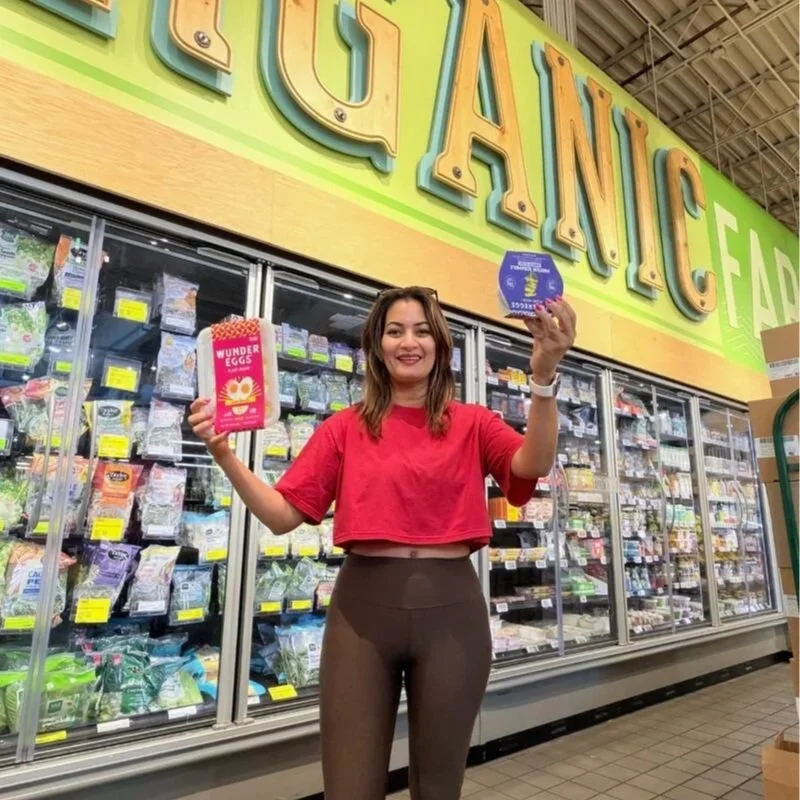
The final packaging decision on Crafty Counter's new WunderEggs Protein Scramble gets made in the store, by a merchandiser the company will never meet. Founder Hema Reddy wrote on LinkedIn that she almost screamed in a Whole Foods aisle when she saw the cups standing upright on the shelf, propped on a kickstand printed into the sleeve. The kickstand closed out a six-step packaging ordeal laid out in her post, and by her account it only works if store staff notice it and use it.
The post reads as an itemized record of how packaging problems compound for a new SKU, with each fix creating the next constraint. Its conclusion lines up with more than a decade of shopper research. A new product gets judged in the one environment its brand doesn't control, by shoppers who scan only part of the shelf and by store staff the brand never meets.
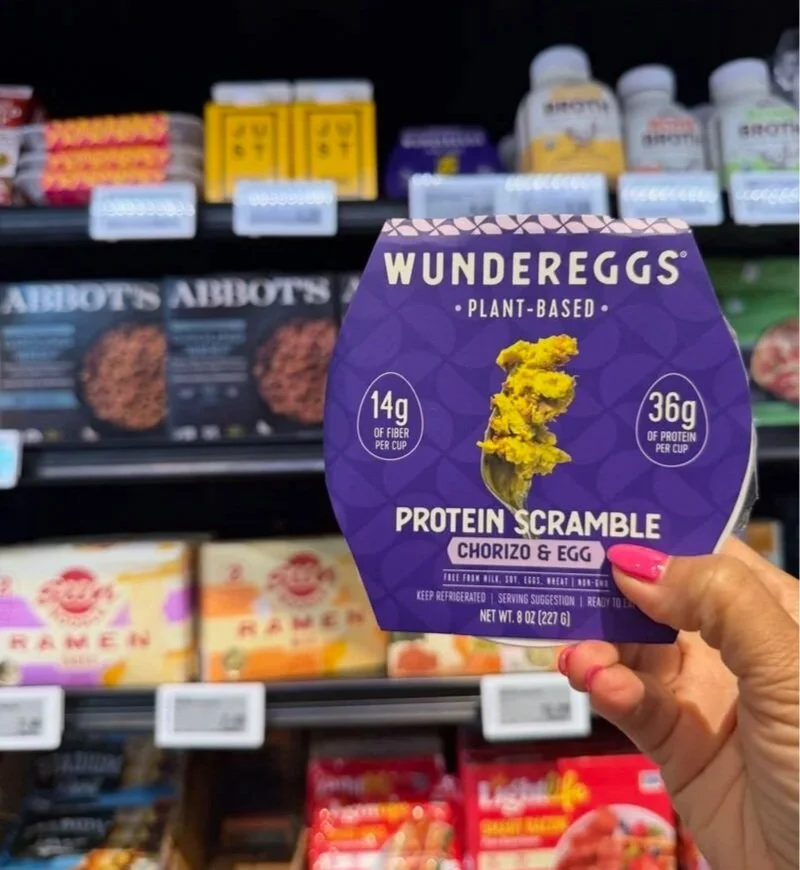
Source: Hema Reddy
Six steps from cup to shelf
Crafty Counter announced the Chorizo & Egg Protein Scramble in a March 2026 press release as the latest step in a three-year relationship with Whole Foods. The refrigerated cup carries 36 grams of protein at a $7.99 suggested retail price and moves the Austin-based maker of plant-based hard-boiled WunderEggs from cold products into hot breakfast.
According to Reddy, the trouble started with volume. The 8-ounce cup was too small, by surface area, for 8 ounces of scramble, so the team had to squeeze the product in. Then, she wrote, the cups came back from high-pressure processing smudged. HPP submerges sealed packages in water at up to 87,000 psi, which is why its packaging has to be water resistant. Reddy wrote that her team got deeply technical documenting what it saw as a large-batch printing problem on the supplier's side, to no avail.
Pre-printed cups with in-mold labels required a minimum order of 500,000 cups, a number Reddy rejected outright for a brand-new SKU. Plain cups with stickers came next. Sticker application machines, Reddy found, need straight-walled cups like the ones pho shops use, and Crafty Counter's cup tapers because its sealing machine needed that slant to run efficiently. The cup's slant was a gift to the sealing machine and a dealbreaker for the sticker machine.
Sleeves finally worked, by Reddy's account. They went on easily, let the team drop the lid and lowered cost of goods, but the sleeved cups didn't stand well on the shelf. The team found a printer that could build a kickstand into the sleeve so the cup stands on its lid end rather than its side.
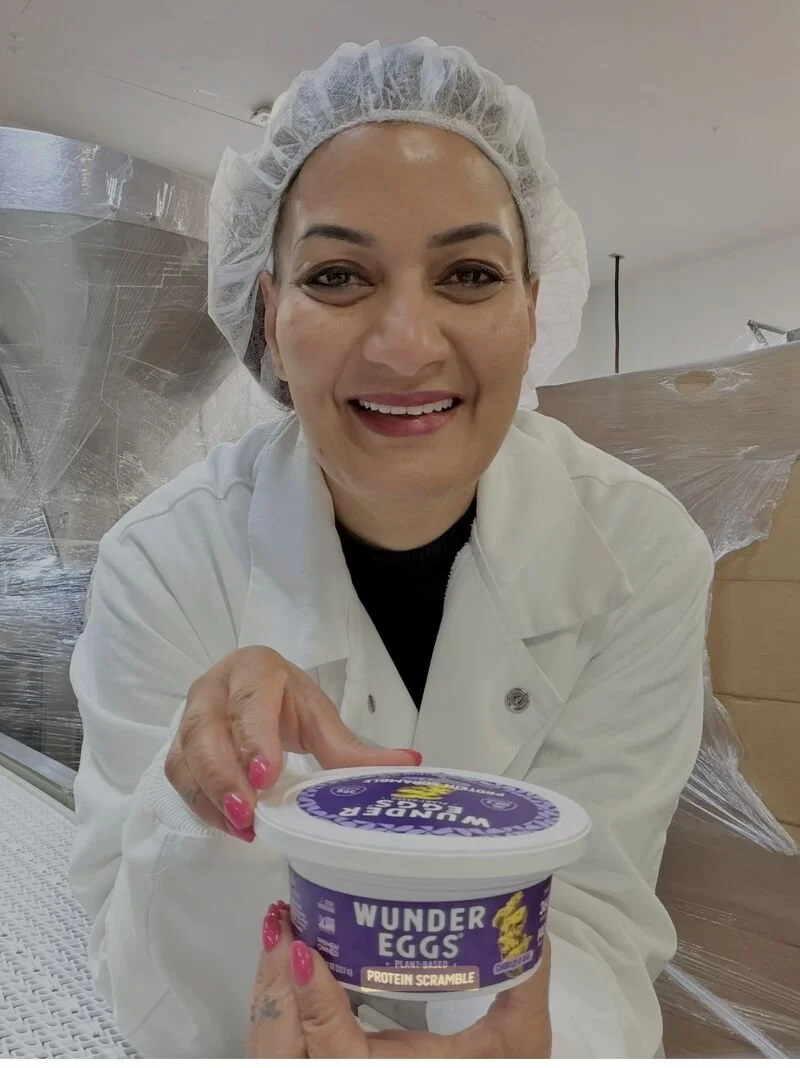
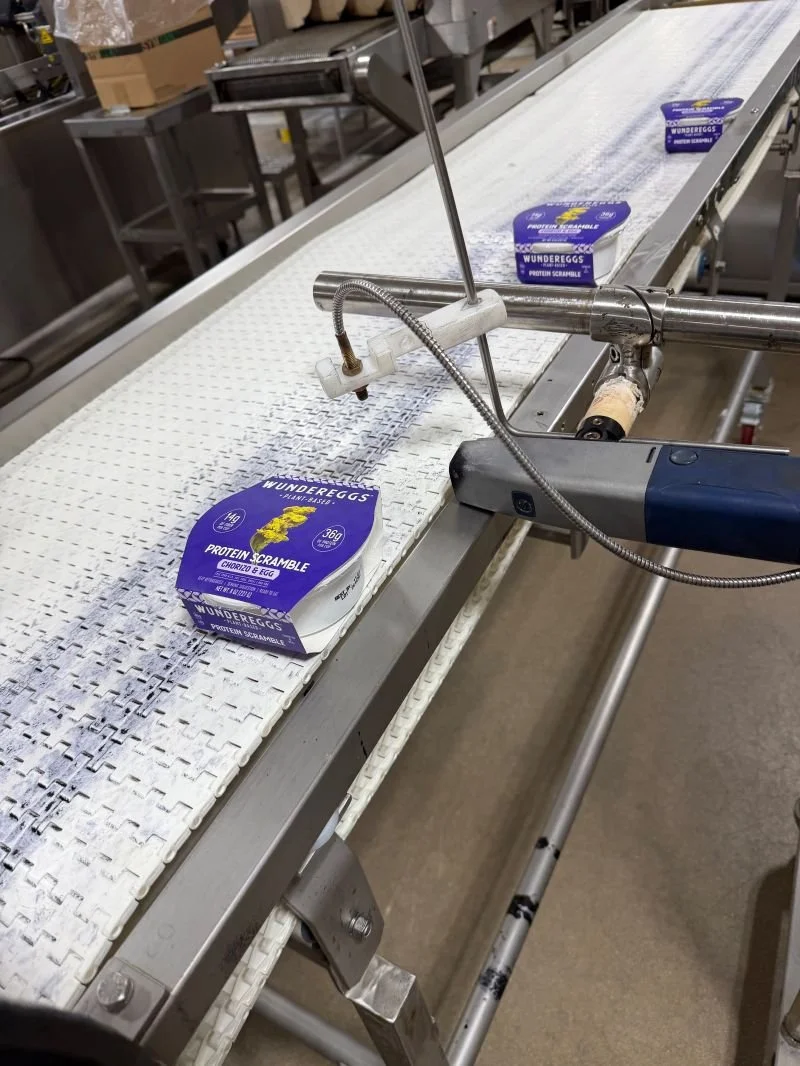
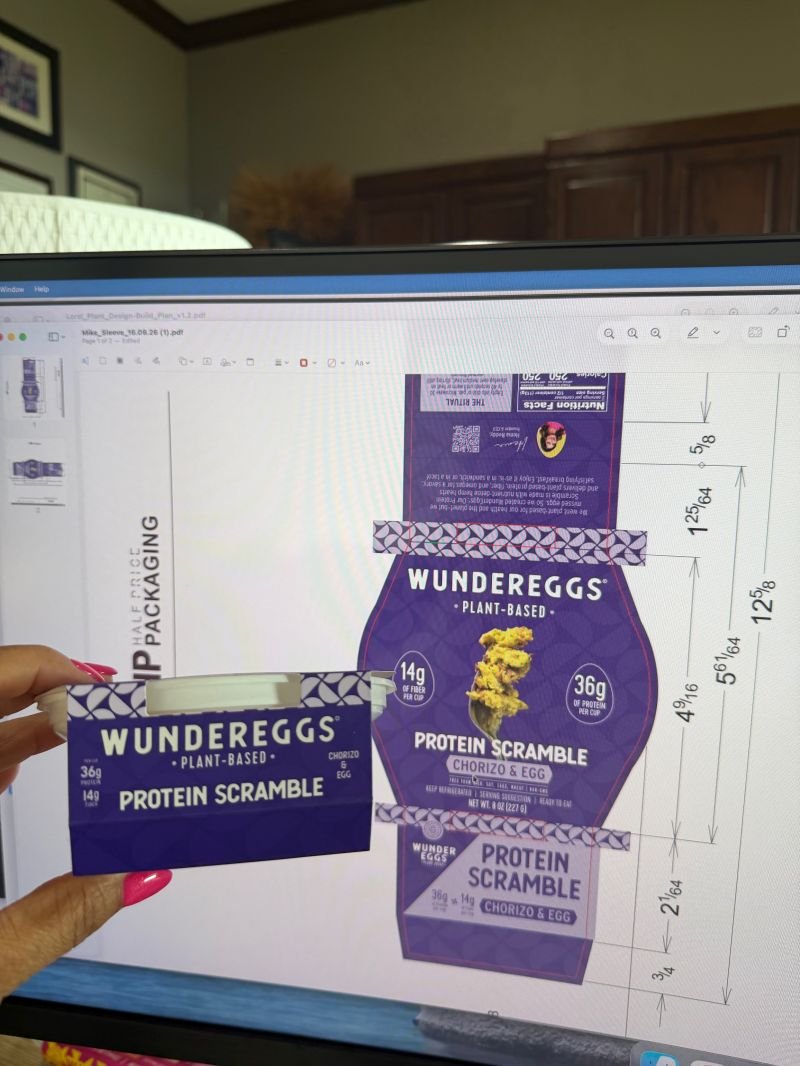
The last link has no spec sheet
The first four steps each came down to a number or a rule, whether a fill volume, a water-resistance requirement, an order minimum or a wall angle. The final step, a store merchandiser placing the cup on the shelf, ran on two seconds of a stranger's attention. Crafty Counter has run into that gap before. When WunderEggs went national at Whole Foods in early 2023, shoppers flooded the brand's Instagram saying they couldn't find the product, and the company told them to ask for their store's dairy buyer, explaining that a team its size couldn't afford dedicated merchandising staff, Vegan Food & Living reported. Three years later, the brand's shelf presence still rests partly on store employees, and this time the packaging itself has to catch their eye.
New products get a few seconds and half a shelf
Eye-tracking research published by Lund University in 2013 found that shoppers looking for a specific product scan no more than half the range on a shelf, and the group's preliminary results suggested shelf placement matters a great deal for less established products while making no difference for established ones. Indiana University professor Raymond Burke has presented data showing shoppers needed 8.2 seconds to find a product on a jumbled shelf and about 5.7 seconds once the same shelf was clearly organized, Retail TouchPoints reported from NRF's 2014 Big Show.
Packaging can move sales even when the product inside stays the same. After Tropicana changed its carton design in early 2009, its unit sales fell 20% between January 1 and February 22, Fortune reported citing Advertising Age, and the brand soon reverted. Within plant-based, Malk Organics redesigned its shelf-stable almond and oat cartons in February 2025 because a narrow, flat label face had given the brand what senior creative director Barrett Brynestad called "a quieter-than-desired presence on-shelf," ProFood World reported. Malk kept the same carton and changed the graphics. Crafty Counter's problem sat a level deeper, in the shape of the package itself.
Reddy drew two lessons. Crafty Counter orders small volumes until a product has spent at least three months on shelf, she wrote, because only a full cycle shows how it fares through the warehouse, the distributor, the store, each store's back room and the merchandising staff. She also called shelf presence the most effective way to move in-store sales, while warning that good packaging on a weak product leaves no second chance, since lapsed shoppers have to be won back at a high price she calls the company's "reclaim cost."
By that first rule, one standing cup in one aisle counts as a good day. The verdict on the kickstand comes after a full cycle through warehouses, distributors and Whole Foods back rooms. For founders planning a refrigerated launch, Reddy's six steps double as a checklist of where a packaging plan can break, ending at a shelf the brand reaches only through someone else's hands.
RECENT POSTS
Get the newsletter.
The funding rounds, founder moves, and industry shifts you need to know in plant-based and sustainability. Plus event invites and founder stories worth reading.